
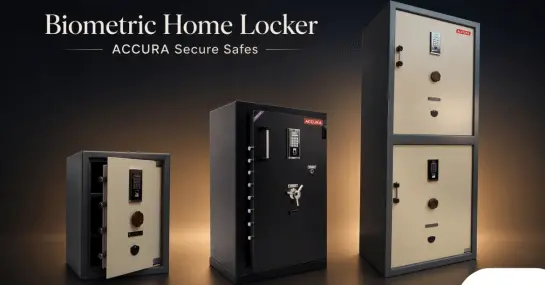
In Indian homes, security needs have evolved beyond simple keys and hidden drawers. Families now protect high-value jewellery, emergency cash, property documents, passports and sensitive digital devices every day. A biometric home locker meets this need by combining fast fingerprint recognition with strong physical construction and reliable backup access methods. The result is a safe that opens in under a second for authorised users while remaining extremely difficult for outsiders to breach.
A biometric home locker uses an optical or capacitive fingerprint scanner to identify registered users. Once the finger is placed correctly, the system matches the unique pattern against stored templates and releases the locking bolts. Most quality units also retain a digital PIN option and a physical emergency key so access is never dependent on a single method. This multi-layer approach has made the biometric home locker one of the preferred choices for modern Indian households.
Why Biometric Access Makes Sense for Homes Today
Traditional mechanical keys can be lost, duplicated or shared without control. Pure PIN systems require remembering codes and carry the risk of someone watching the entry. A biometric home locker solves both problems. Fingerprints cannot be easily copied or forgotten, and registration can be limited to trusted family members only. In homes with domestic help or frequent visitors, this eliminates the awkward need to hide valuables every time staff are present.
Urban theft patterns also favour biometric solutions. Most burglars look for quick, low-effort targets. A steel locker that is bolted down and requires a live fingerprint (or correct PIN plus key) raises the difficulty level significantly. For jewellery-heavy households, the speed of fingerprint access means valuables can be retrieved quickly during festivals, weddings or emergencies without searching for keys or recalling codes.
How a Biometric Home Locker Works in Practice
The fingerprint scanner captures the unique ridges and valleys of a registered finger. Modern sensors work even with slight variations in placement and can store multiple fingerprints (often 10–25 or more depending on the model). Recognition typically takes less than one second under normal conditions. Once verified, motorised or mechanical bolts retract and the door opens.
If the scanner has difficulty reading a finger (wet, dry or injured), the user can switch to the PIN keypad. If both electronic methods fail due to complete battery depletion, the emergency override key provides mechanical access. Low-battery indicators and, on many models, tamper alarms give advance warnings. Some units also log access attempts, helping families track who opened the locker and when.
Battery life is similar to standard digital lockers — usually 12–24 months with regular AA cells. The scanner itself consumes power only during the brief recognition process, so overall consumption remains low. External power contacts or USB backup options on advanced models further reduce lockout risk.
Essential Features of a Reliable Biometric Home Locker
When selecting a biometric home locker, these practical points matter most:
- Scanner quality and capacity: Look for sensors rated for high recognition accuracy and the ability to store multiple fingerprints. Optical or capacitive scanners that handle everyday Indian conditions (humidity, slight dirt) perform better long-term.
- Dual or triple locking: Fingerprint + PIN + emergency key is the ideal combination. Never rely on biometrics alone.
- Steel construction: Body thickness of 3 mm and door thickness of 6 mm, preferably single-sheet moulded and powder-coated, provide real resistance to prying and drilling.
- Mounting capability: Pre-drilled holes for wall or floor bolting are critical. An unbolted locker can still be removed.
- Internal layout: Shelves or compartments help organise jewellery sets, documents and cash without damage.
- Alarms and indicators: Tamper alerts, wrong-attempt lockouts and low-battery warnings add practical security layers.
- User management: Easy registration and deletion of fingerprints suit changing family needs.
Size selection follows the same logic as digital lockers. Compact units (15–25 litres) suit personal jewellery and daily documents. Medium family sizes (35–45 litres) handle full collections plus papers for several members. Larger models serve home offices or joint families with more extensive storage needs.
Placement, Installation and Daily Use Tips
Position the biometric home locker where it is convenient yet not obvious. Master bedrooms, wardrobes or dedicated storage areas work well. Ensure the location allows comfortable finger placement on the scanner. Follow Vastu guidelines if preferred by the household.
Bolting is essential. Use the supplied anchors and confirm the mounting surface can support the weight. After installation, register the primary user’s fingerprints carefully, add secondary family members if required, set a strong PIN, and test the emergency key. Store the override key in a separate secure location known only to trusted adults.
Keep the scanner surface clean with a soft dry cloth. Avoid applying oils or lotions immediately before use. If recognition becomes inconsistent, re-register the fingerprint or switch temporarily to PIN mode. Check batteries every six months as routine maintenance.
Everyday Advantages Families Experience
A biometric home locker delivers speed and control that other systems struggle to match. Authorised users open the door almost instantly. Guests or staff cannot access contents without permission. The risk of lost or copied keys disappears. Documents and jewellery remain protected from casual viewing and opportunistic theft.
Over time the one-time cost is usually lower than repeated bank locker rentals, especially when factoring in travel time and restricted access hours. For families that travel frequently or have elderly members, the combination of fingerprint convenience and backup methods provides genuine peace of mind. In the event of a minor fire or water incident, the steel enclosure offers far better protection than ordinary furniture.
Common Mistakes to Avoid
Buyers sometimes choose the cheapest scanner-equipped unit without checking steel thickness or dual locking. Others skip bolting or store the emergency key inside the locker itself. Registering fingerprints poorly (wet fingers, partial placement) can cause later frustration. Avoid these by treating the purchase as a long-term security asset and following proper setup steps.
Conclusion
A biometric home locker represents a clear upgrade for Indian households that need fast, controlled access to jewellery, documents and cash without sacrificing physical strength. The combination of fingerprint recognition, PIN backup and emergency key, supported by thick steel construction and proper mounting, creates a practical daily security solution.
ACCURA designs biometric home lockers with exactly these priorities in mind. ACCURA models feature reliable fingerprint scanners capable of storing multiple impressions, dual locking systems that combine biometric access with digital PIN and mechanical emergency key, robust mild-steel bodies (typically 3 mm body and 6 mm door), single-sheet moulding, powder-coated finishes, pre-drilled mounting points, and thoughtful internal organisation. ACCURA supports customers with clear guidance, multi-year service backup and a focus on real Indian home conditions. When you choose an ACCURA biometric home locker, you gain fast authorised access, strong physical protection and the confidence that comes from a brand built for everyday family security needs.
FAQs
Q: How many fingerprints can a typical biometric home locker store? A: Most quality models store 10–25 fingerprints or more, allowing several family members to register.
Q: What if the fingerprint scanner fails to recognise my finger? A: Use the PIN keypad as backup. If electronics are completely without power, use the emergency override key.
Q: Does a biometric home locker still need to be bolted down? A: Yes. Bolting prevents the entire unit from being carried away and is one of the most important security steps.
Q: How long do the batteries last? A: Under normal household use, batteries typically last 12–24 months. Low-battery indicators provide advance warning.
Q: Is a biometric home locker suitable for elderly users? A: Yes. Once fingerprints are registered, access is usually faster and easier than remembering PINs or handling keys.