
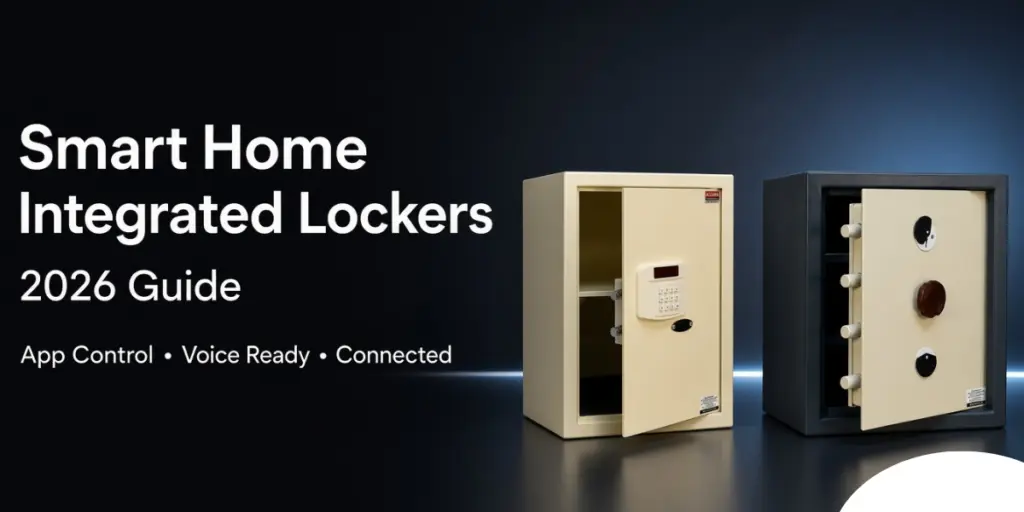
Home security no longer works in isolation. In 2026, many households already use smart lights, cameras, door locks, and voice assistants. A smart home integration locker extends that connected experience to your valuables by linking the locker with the same ecosystem you already use.
These lockers can respond to voice commands, appear in your smart home app, trigger automations, and send status updates — all while maintaining strong physical security and offline backup access.
Why Smart Home Integration Matters in 2026
Modern homes increasingly run on unified platforms. Key reasons integration has become important:
- People want one app or voice system to control multiple devices
- Automations create useful routines (for example, locking the locker when the house is set to “Away”)
- Remote monitoring and temporary access become simpler
- Matter and Thread standards have reduced compatibility problems between brands
- Local control options protect privacy and keep the locker working during internet outages
A well-integrated home locker feels like a natural part of the home rather than a separate security device.
Core Integration Features to Look For
1. Matter / Thread Compatibility
Matter has become the preferred open standard in 2026. Lockers that support Matter work more reliably across Amazon Alexa, Google Home, Apple Home, and other platforms without heavy dependence on proprietary hubs.
2. Voice Control
Basic commands such as “lock the safe” or status checks through Alexa or Google Assistant add daily convenience.
3. App Unification
The locker should appear inside the same app you already use for lights, cameras, or door locks. This reduces the need for multiple separate applications.
4. Automations and Routines
Useful examples include:
- Automatically locking when the home security system is armed
- Sending a notification if the locker is opened while you are away
- Creating temporary access codes that expire after a set time
5. Local and Offline Operation
Even with smart features, the locker must open with fingerprint, PIN, or key when the internet is down. Cloud dependency should never be the only way to access it.
6. Privacy-Focused Design
Prefer models that process biometric data on the device and limit what information is sent to the cloud.
Practical Benefits of an Integrated Locker
- Control and monitoring from the same interface as the rest of the home
- Ability to grant temporary access remotely
- Clear status visibility (locked/unlocked, battery level)
- Reduced friction for family members who already use smart home devices
- Better overall security through linked automations with cameras or door locks
What Still Matters More Than Connectivity
Smart features are useful, but they should not replace core security requirements:
- Strong steel construction and anti-pry design
- Reliable biometric or digital locking with mechanical key backup
- Decent fire and water resistance
- Solid battery life and clear low-battery alerts
- Easy user management for multiple family members
Integration is an enhancement, not a substitute for physical security.
Ideal Use Cases in 2026
| Situation | Useful Integration Feature | Benefit |
|---|---|---|
| Busy family | Shared app + individual access | Everyone can check status easily |
| Frequent travellers | Remote locking and temporary codes | Control while away |
| Home with security cameras | Linked notifications | Know if the locker is opened unexpectedly |
| Voice-controlled smart home | Alexa / Google commands | Hands-free convenience |
| Privacy-conscious users | Local processing + Matter | Less cloud dependence |
Common Mistakes to Avoid
- Choosing a locker that only works with one brand’s ecosystem
- Prioritising smart features over build quality and backup access
- Buying a model that requires constant internet to open
- Ignoring battery life and replacement practicality
- Over-complicating automations that family members will not use
How to Choose the Right Smart Home Integration Locker
Ask these three questions first:
- Which smart home platform do you already use (Alexa, Google, Apple, or mixed)?
- Do you need remote access and automations, or is local app control enough?
- How important is long-term compatibility (Matter support)?
Answering these will guide you toward models that fit your existing setup. For most households in 2026, a locker with Matter compatibility, reliable local access methods, and solid physical security offers the best long-term value.
FAQs About Smart Home Integrated Lockers
1. Do smart home lockers work if the internet is down?
Yes. Quality models continue to open with fingerprint, PIN, or mechanical key offline. Smart features such as remote control and some notifications require connectivity.
2. What is Matter and why does it matter for lockers?
Matter is an open smart home standard that improves compatibility between different brands and platforms. A Matter-compatible locker is more likely to work smoothly with Alexa, Google Home, Apple Home, and future devices.
3. Can I control the locker with voice commands?
Many integrated models support basic voice commands through Alexa or Google Assistant, such as checking status or locking the unit. Unlocking by voice is usually restricted for security reasons.
4. Is biometric data stored in the cloud?
Prefer models that process fingerprints or other biometrics locally on the device. This approach keeps sensitive data more private.
5. Will the locker work with my existing smart home devices?
Check for Matter support or explicit compatibility with your platform (Alexa, Google, Apple, etc.). Proprietary-only systems can create long-term limitations.
6. Are integrated lockers less secure because they are connected?
Not necessarily. The physical construction, locking mechanism, and local access methods determine core security. Choose models with strong encryption, local processing, and mechanical backups to maintain high protection.
Final Thoughts
A smart home locker brings your valuables into the connected home experience of 2026. When the locker works with the same platforms you already use, daily management becomes simpler and more consistent with the rest of the house.
The most successful choices balance modern connectivity with proven physical security. Prioritise Matter compatibility, reliable offline access, strong construction, and clear user controls. Integration should make life easier without introducing new risks or complexity.
Identify the smart home system you already rely on, decide how much remote control you actually need, and then select a locker that supports those requirements while delivering solid core protection. That approach results in a connected locker that fits naturally into your home.