
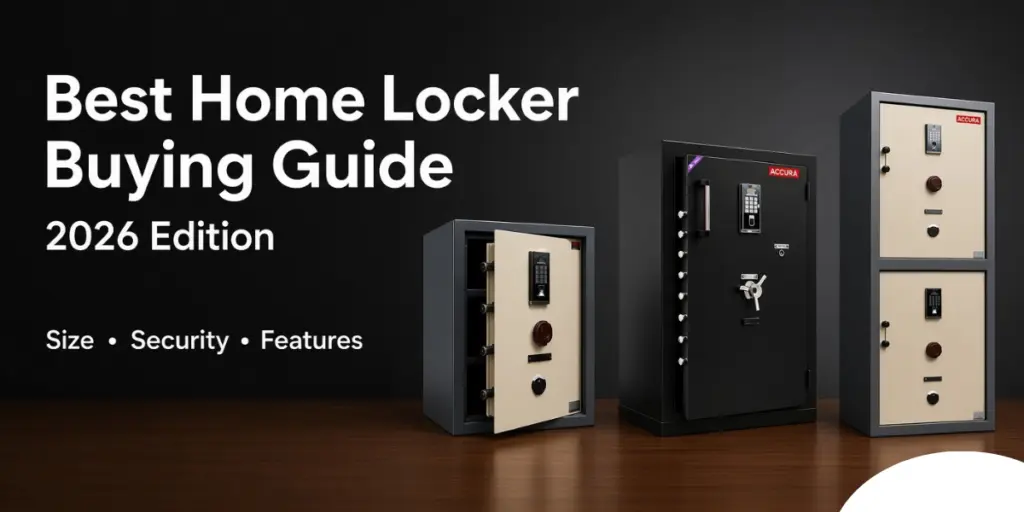
Buying a home locker is a long-term decision. The right unit protects valuables for years; the wrong one creates daily frustration or fails when you need it most. This best home locker buying guide for 2026 gives you a clear, practical framework so you can choose with confidence.
Step 1: Decide What You Need to Protect
Start with the contents, not the locker.
- Jewelry and gold
- Passports, property papers, certificates, and insurance documents
- Cash
- Hard drives or digital backups
- A mix of the above
List the items and roughly estimate the volume. Add 20–30% extra capacity for future needs. This single step prevents most size-related mistakes.
Step 2: Choose the Right Size and Type
| Type | Best For | Typical Placement | Notes |
|---|---|---|---|
| Compact / Portable | Documents, small jewelry | Wardrobe, cupboard, shelf | Easy to move, limited capacity |
| Medium wall or floor | Jewelry + documents + cash | Bedroom, study | Most popular for families |
| Large floor-standing | Higher volume or mixed valuables | Closet, dedicated corner | Heavier, better for permanent use |
| Hidden / furniture-style | Discreet storage | Behind mirrors or in cabinets | Prioritises aesthetics |
Measure the exact space available before shortlisting models. External dimensions matter more than claimed internal volume.
Step 3: Prioritise Core Security Features
These elements matter more than smart extras:
Construction
Look for thick steel, continuous welding or strong seams, anti-pry doors, and solid locking bolts (preferably multiple).
Locking Mechanism
- Biometric (fingerprint) – fast and convenient
- Digital keypad – reliable and easy to share temporarily
- Mechanical key or dial – essential as backup
Best practice in 2026: biometric or digital + mechanical key override.
Fire Resistance
Verified ratings (30 or 60 minutes) protect documents. Check independent test data rather than marketing claims.
Water Resistance
Sealed doors help protect against firefighting water or minor flooding.
Anchoring
Bolting the locker to the floor or wall significantly improves security. Confirm the model has proper anchoring points.
Step 4: Evaluate Smart and Convenience Features
Useful 2026 features include:
- Multiple user profiles (fingerprints + PINs)
- Access logs
- Temporary or one-time codes
- App monitoring and low-battery alerts
- Matter compatibility for smart home integration
These are valuable but secondary. Never sacrifice build quality or backup access for connectivity.
Step 5: Consider Placement and Daily Use
Ask yourself:
- Will the locker be opened daily or only occasionally?
- How many people need regular access?
- Is discreet placement important?
- Can it be bolted down?
- Is the location safe from obvious view (windows, main door)?
Bedroom cupboards, wardrobes, and study areas remain the most practical locations for most homes.
Step 6: Check Practical Ownership Factors
- Battery life and ease of replacement
- Warranty length and service network
- Availability of spare keys or replacement parts
- Weight (important if you may move)
- Total cost of ownership (not just purchase price)
A slightly more expensive locker with better support and durability usually costs less over time.
Quick Decision Framework
- List what you will store and estimate volume.
- Measure available space.
- Decide required protection level (theft only vs fire + water).
- Choose primary access method (biometric, digital, or both) plus mechanical backup.
- Confirm multi-user needs and any smart features you will actually use.
- Verify construction quality, certifications, and after-sales support.
Real Insights from 2026 Buyers
- Most people underestimate capacity and later wish they had bought larger.
- Fire protection is frequently undervalued until documents are at risk.
- Models with simple, reliable access outperform feature-heavy units that frustrate users.
- Anchoring the locker makes a bigger security difference than many expect.
- After-sales service becomes critical when batteries, sensors, or keys need attention.
Common Mistakes to Avoid
- Buying based only on price or appearance
- Choosing a digital-only locker with no mechanical backup
- Ignoring fire and water ratings
- Selecting a size that does not fit the intended space
- Overlooking multi-user requirements in family homes
- Forgetting to plan for bolting or discreet placement
FAQs – Home Locker Buying Guide
1. What size home locker do most families need?
A medium-size unit that fits inside a wardrobe or cupboard is sufficient for most households storing jewelry, documents, and some cash. Measure your items and available space for accuracy.
2. Is biometric access better than a digital keypad?
Biometric is faster for daily personal use. A digital keypad is more convenient for temporary access. The best option in 2026 is a combination of both plus a mechanical key.
3. How important is fire resistance?
Very important if you store documents or irreplaceable papers. Even moderate fire ratings significantly improve the chances of contents surviving a house fire.
4. Should I buy a smart connected locker?
Only if you will use the features (remote monitoring, temporary codes, or smart home routines). Core security and reliability should always come first.
5. Can I install a home locker in a rented apartment?
Yes. Freestanding digital or biometric models require no permanent changes. Wall-mounted units may need landlord permission.
6. How long should a good home locker last?
With proper use and basic maintenance, a quality locker should provide reliable service for 10 years or more. Battery-powered electronic components may need occasional attention.
Final Thoughts
The best home locker in 2026 is the one that matches your actual storage needs, fits your space, delivers solid physical security, and remains convenient for daily use. Smart features and modern access methods are valuable additions when they support, rather than replace, strong construction and reliable backup entry.
Follow the step-by-step framework: define what you are protecting, measure your space, prioritise security fundamentals, then add convenience features that you will genuinely use. This methodical approach prevents costly mistakes and results in a locker that works quietly and effectively for years.
Begin with a clear list of items and accurate measurements. Those two pieces of information will guide every other decision and help you select a home locker that truly fits your life.