
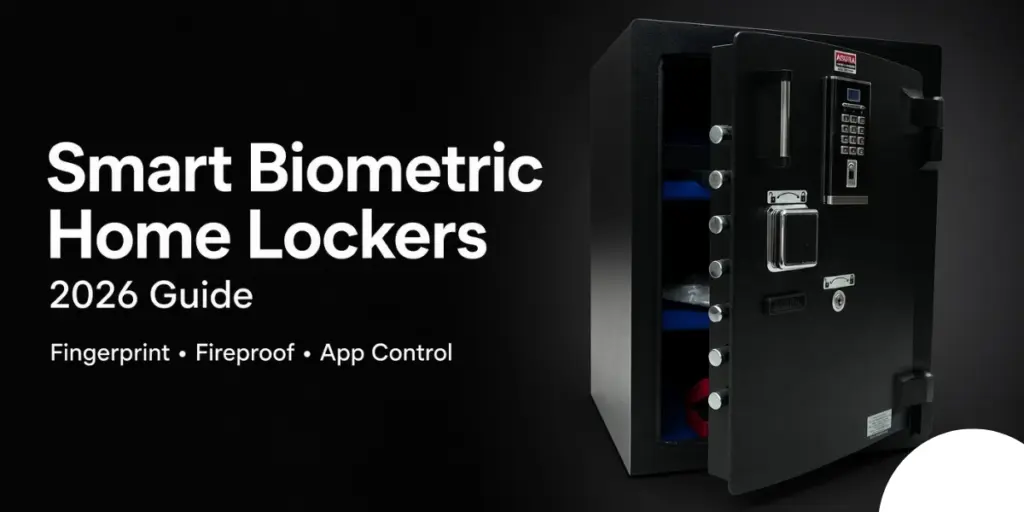
Home security has changed. In 2026, more homeowners are moving away from traditional key-operated safes and choosing smart biometric home lockers that open with a fingerprint, face, or app. These units combine convenience with stronger protection against both theft and everyday risks like fire or water damage.
Why Smart Biometric Home Lockers Are Rising in 2026
Several clear trends are driving demand:
- Biometric access is now mainstream — Fingerprint sensors have become faster and more reliable. Many models now process data on the device itself instead of sending it to the cloud, which improves privacy.
- Multi-user households need flexibility — Families want individual access for different members without sharing one master key or code.
- Aesthetic design matters — Modern buyers prefer lockers that look like furniture or blend into walls rather than large metal boxes.
- Dual protection is expected — Fire resistance and waterproof seals are no longer premium extras. People want protection from both burglars and household disasters.
- Smart home integration — Many units now work with apps, voice assistants, and Matter-compatible ecosystems.
These changes make biometric home lockers practical for apartments, family homes, and even home offices.
Key Features to Look for in 2026
When choosing a smart biometric home locker, focus on these practical points:
1. Biometric Technology
Fingerprint sensors remain the most common and reliable option. Look for models with liveness detection (to prevent fake fingerprint attacks) and the ability to store multiple fingerprints (usually 10–50 users). Some higher-end units also offer facial recognition or palm vein scanning.
2. Backup Access Methods
Never rely on biometrics alone. Good lockers always include at least one backup: a PIN code, a physical key, or app-based temporary access. Power failure or sensor issues should never lock you out permanently.
3. Fire and Water Resistance
Check independent ratings. A solid fire rating (typically 30–60 minutes at high temperatures) plus waterproof seals gives real protection for documents, jewelry, and cash.
4. Construction and Security Level
Thicker steel, anti-pry hinges, and solid locking bolts matter more than flashy features. Look for units that resist drilling and forced entry.
5. App and Connectivity
Useful features include remote locking/unlocking, access logs (who opened it and when), temporary guest codes, and low-battery alerts. Prefer models that continue working offline.
6. Size and Placement
Decide what you need to store. Compact lockers suit apartments and jewelry. Larger floor models handle documents, cash, and electronics. Wall-mounted or furniture-style designs help with discreet placement.
Real Benefits Homeowners Are Seeing
- Faster daily access without searching for keys
- Clear records of who accessed the locker
- Ability to give temporary access to family or trusted help without sharing permanent codes
- Better protection for passports, property papers, gold, and digital backups
- Peace of mind that the locker still works during power cuts or internet outages
Common Mistakes to Avoid
- Buying purely on looks without checking fire/water ratings
- Choosing a model with only biometric access and no mechanical backup
- Placing the locker in an obvious high-traffic area
- Ignoring battery life and replacement ease
- Skipping proper anchoring to the floor or wall
How to Choose the Right One for Your Home
Ask yourself three questions:
- What am I primarily protecting (jewelry, documents, cash, electronics)?
- How many people need regular access?
- Do I prefer a freestanding, wall-mounted, or furniture-style unit?
Answering these will narrow the options quickly. For most Indian households in 2026, a mid-size biometric locker with fingerprint + PIN + key backup, solid fire resistance, and app monitoring offers the best balance.
FAQs About Smart Biometric Home Lockers
1. How accurate are fingerprint sensors on home lockers in 2026?
Modern sensors are highly accurate when fingers are clean and dry. Most quality models include multiple scan attempts and liveness detection. Performance can drop slightly with wet or dirty fingers, which is why a PIN backup is essential.
2. Can multiple family members use the same locker?
Yes. Most smart biometric lockers support 10–50 fingerprints plus additional PIN codes. You can also create temporary access codes for guests or domestic help.
3. Do these lockers work during a power cut?
Yes. They run on batteries (usually AA or built-in rechargeable). Battery life typically lasts 6–18 months depending on usage. Low-battery warnings appear well in advance, and mechanical keys always work as a final backup.
4. Are biometric home lockers safe from hacking?
Models that process biometric data locally (on the device) are significantly safer than those that send data to the cloud. Choose lockers with strong encryption for the app connection and avoid cheap no-name brands with poor security track records.
5. What fire rating should I look for?
Aim for at least 30 minutes of fire protection at high temperatures. Higher ratings (60 minutes or more) are better if you store important documents or valuables that cannot be easily replaced.
6. Can I install a biometric home locker in a rented apartment?
Yes. Many compact and freestanding models require no permanent drilling. Wall-mounted options can sometimes use temporary mounting solutions, but always check with your landlord first.
Final Thoughts
A smart biometric home locker in 2026 is no longer a luxury item — it is a practical security upgrade. The combination of fast fingerprint access, multi-user support, fire and water protection, and optional app control makes these units far more useful than traditional safes for modern homes.
Choose a model with strong construction, reliable biometrics, proper backup access, and certified protection ratings. When selected carefully, it becomes a quiet but powerful part of your home security setup.
If you are planning to buy, start by listing exactly what you need to protect and how many people will use it. That simple step will help you avoid overpaying for features you do not need and ensure the locker actually fits your daily life.