
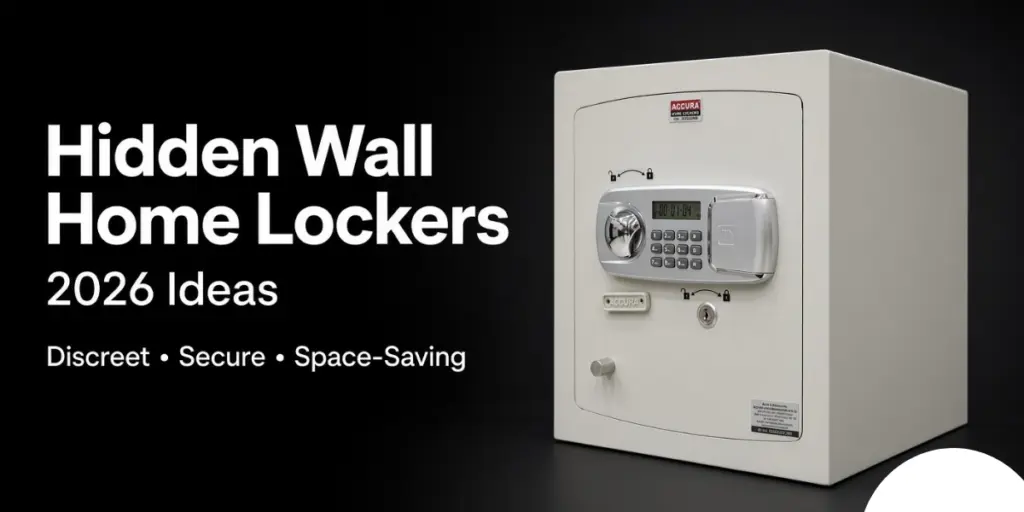
Visible metal lockers no longer fit the way most people design their homes. In 2026, the demand for hidden wall home lockers is rising because homeowners want security that disappears into the background. These lockers sit flush with the wall, hide behind mirrors or artwork, or integrate into furniture so they do not announce their presence.
A well-designed hidden wall locker protects valuables while keeping the room looking clean and intentional.
Why Hidden Wall Lockers Are Trending in 2026
Several shifts are driving this preference:
- Modern interiors favour clean lines and minimal visible hardware
- Urban apartments and smaller homes need security solutions that do not consume floor space
- Visible safes can attract attention; hidden ones reduce the chance of being targeted
- Smart access (fingerprint, PIN, or app) removes the need for obvious dials or keyholes
- Homeowners want storage that feels like part of the architecture rather than an add-on
The best hidden wall lockers in 2026 combine strong security with thoughtful design so they function as both protection and interior detail.
Popular Ways to Hide a Wall Locker
1. Flush Wall-Mounted Units
These sit almost level with the wall surface. Once painted or finished to match the surrounding wall, they become nearly invisible. Ideal for bedrooms and study areas.
2. Behind Mirrors or Artwork
A hinged mirror or framed picture conceals the locker door. This method works especially well in bedrooms and living rooms where wall space is limited.
3. Inside Custom Cabinetry
The locker is built into a wardrobe, TV unit, or bookshelf. The outer doors look like normal storage while the inner compartment remains highly secure.
4. Behind Sliding Panels or False Walls
In larger homes or renovations, a section of wall can hide a deeper locker. This approach suits high-value storage but requires more planning during construction or renovation.
5. Furniture-Style Integration
Some models are designed to look like side tables, consoles, or wall niches. They offer the strength of a proper locker while blending with existing furniture.
Key Features to Prioritise
When selecting a hidden wall home locker, focus on these practical points:
- Shallow depth — Most wall cavities allow only limited depth. Choose models designed specifically for wall mounting.
- Strong mounting system — The locker must be firmly anchored to wall studs or solid masonry. Weak mounting defeats the purpose.
- Quiet and reliable access — Fingerprint or digital locks are preferred because they avoid large external dials.
- Fire and impact resistance — Even a hidden unit should offer basic fire protection and resist forced entry.
- Internal organisation — Adjustable shelves, soft lining for jewelry, and document slots improve daily usability.
- Backup entry — Always include a mechanical key or secondary code in case of battery or sensor failure.
Installation Considerations
Proper installation is critical. A poorly mounted hidden locker can be pried off the wall. Best practices include:
- Anchoring into structural elements (studs or concrete), not just drywall
- Ensuring the door opens fully without obstruction
- Leaving enough clearance for the chosen access method (especially biometric sensors)
- Matching the external finish to the wall colour or surrounding surfaces
- Testing the lock and backup method after installation
For rented apartments, freestanding or furniture-style hidden options are often more practical than permanent wall mounting.
Real Benefits Homeowners Experience
- The room looks intentional and uncluttered
- Guests and casual visitors do not notice the secure storage
- Floor space remains free
- Daily access stays convenient with modern biometric or digital locks
- Valuables stay protected without turning the home into a fortress aesthetic
Common Mistakes to Avoid
- Choosing a locker that is too deep for the wall cavity
- Mounting only into plasterboard without proper reinforcement
- Selecting a model with noisy or slow locking mechanisms
- Ignoring fire resistance because the unit is “hidden”
- Forgetting to plan for battery replacement access
How to Decide If a Hidden Wall Locker Suits You
Ask these three questions:
- Do you have a suitable wall location with structural support?
- Are you willing to invest in proper professional installation if needed?
- Do you prefer the security to remain completely discreet?
If the answer to most of these is yes, a hidden wall home locker is likely a strong fit. For renters or those who move frequently, a high-quality furniture-integrated option may be more flexible.
FAQs About Hidden Wall Home Lockers
1. Can a hidden wall locker be as secure as a freestanding safe?
Yes, provided it is properly anchored into solid structure and built with thick steel and quality locking bolts. The concealment itself adds an extra layer of protection by reducing visibility.
2. How deep are most wall-mounted lockers?
Many models designed for walls range between 10 cm and 20 cm in depth. Always measure your wall cavity and available space before purchasing.
3. Do hidden lockers support biometric access?
Yes. Many 2026 models include fingerprint sensors or digital keypads that sit flush or nearly flush with the surface, maintaining the clean look.
4. Is professional installation necessary?
For true wall-mounted units, professional installation is strongly recommended. Incorrect mounting can compromise both security and wall integrity.
5. Can I install one in a rented apartment?
Permanent wall mounting may not be allowed. In that case, consider furniture-style hidden lockers or freestanding units that can be moved later.
6. What happens if the power or battery fails?
Quality models always include a mechanical key override or secondary access method so you are never locked out permanently.
Final Thoughts
A hidden wall home locker offers one of the most elegant security upgrades available in 2026. It protects important items without disrupting the look of your home and makes efficient use of wall space that would otherwise remain unused.
The best results come from choosing a purpose-built wall model, installing it correctly, and pairing it with reliable modern access. When done well, the locker becomes almost invisible — exactly the point.
If you are considering one, start by identifying a suitable wall location and measuring the available depth. That simple first step will quickly show whether a hidden wall solution is practical for your space.