
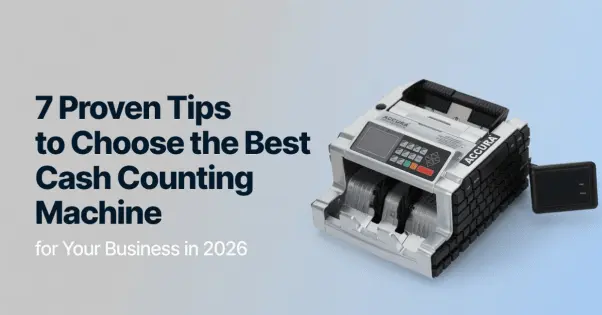
If you still count cash by hand at the end of a long day, you already know how tiring and risky it is. Notes get mixed, fatigue sets in, mistakes happen, and sometimes fake notes slip through. A good cash counting machine solves these problems in a practical, everyday way. But not every machine delivers the same results. Choosing the right one makes a real difference to your daily operations, accuracy, and peace of mind.
Here are seven proven tips that business owners, shopkeepers, petrol pump operators, and office managers actually use when selecting a reliable cash counting machine.
1. Never Compromise on Counterfeit Detection Fake notes are getting smarter every year. The best machines use multiple detection methods together — ultraviolet (UV), magnetic (MG), and infrared (IR). Some advanced models also check watermark and size. A machine that only does basic UV checking is no longer enough for most businesses. Look for models that stop automatically and give a clear alert when a suspicious note is detected. This single feature alone can save you from significant losses.
2. Check the Real Counting Speed Manufacturers often quote high speeds, but real-world performance matters more. A machine that counts 900–1200 notes per minute is comfortable for most retail and small business needs. If you handle very high volumes daily (banks, large stores, or cash collection centres), aim for higher speeds. Slow machines create bottlenecks during peak hours and defeat the purpose of buying one.
3. Hopper and Stacker Capacity Should Match Your Volume A small hopper forces you to keep refilling, which wastes time. For typical shops and offices, a 200–300 note hopper works well. Larger operations benefit from higher capacity. Also check how easily the stacker holds the counted notes without jamming or falling.
4. Decide Between Piece Counting and Value Counting Basic machines only count the number of notes. Value-counting machines recognise denominations and give you the total amount automatically. If you deal with mixed notes regularly, value counting saves a huge amount of time and reduces calculation errors. Many modern machines offer both modes.
5. Build Quality and Noise Level Matter More Than You Think A machine that rattles, vibrates heavily, or overheats after 20–30 minutes of continuous use will frustrate your staff. Solid construction, proper cooling, and relatively quiet operation make a big difference in a busy environment. Dust resistance is also important in Indian conditions where notes can be dusty or slightly worn.
6. Warranty, Service Support, and Spare Parts Availability Even the best machine can develop issues over time. Local service centres, quick response, and easy availability of spare parts are more valuable than fancy features that look good on paper. Always ask about warranty coverage (preferably 1 year or more) and whether on-site service is available in your area.
7. Ease of Use and Display Quality A clear LCD or LED display, simple buttons, and useful features like voice alerts, batch counting, and auto start/stop make daily use much smoother. Machines that are complicated to operate often end up unused or create more errors. Test the machine if possible before buying.
Many people buy the cheapest option available and regret it within a few months when detection fails, jams increase, or the machine stops working. Spending a bit more on a reliable model usually pays for itself through time saved, fewer errors, and better protection against fake notes.
Once you start using a good cash counting machine, going back to manual counting feels almost impossible. The process becomes faster, cleaner, and far less stressful. Your staff can focus on customers instead of spending long minutes counting and double-checking cash.
Take these seven points seriously when you compare options. Match the machine to your actual daily volume and working conditions rather than just looking at the lowest price. The right cash counting machine becomes a quiet, reliable part of your daily routine and protects both your time and your money.
FAQs :
Q1. What is the ideal counting speed for a cash counting machine? A good cash counting machine should count between 900 to 1200 notes per minute for most shops and offices. Higher speed is better for banks or high-volume businesses.
Q2. How important is fake note detection in a cash counting machine? It is one of the most important features. Always choose a machine with UV, MG, and IR detection so fake notes are caught instantly.
Q3. Should I buy a value counting or piece counting machine? If you handle mixed denominations daily, go for a value counting machine. It calculates the total amount automatically and saves a lot of time.
Q4. How much should I budget for a reliable cash counting machine? A good quality machine with proper detection usually starts from a reasonable mid-range price. Avoid the cheapest options as they often lack strong fake note detection and durability.