
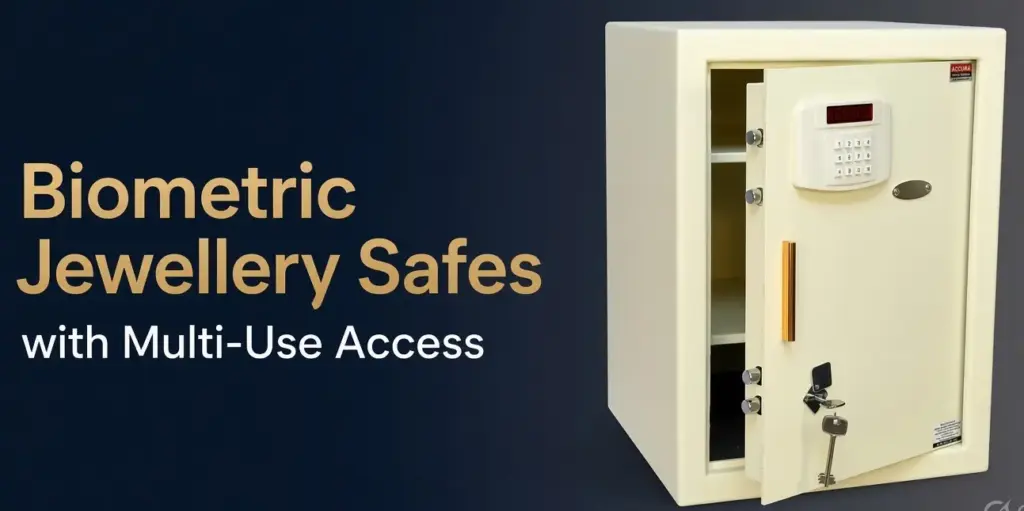
Discover the top biometric safe lockers for Indian homes in 2026. Fingerprint access, ideal sizes, steel construction and key features to securely protect jewellery, cash and important documents.
Indian households hold significant gold jewellery, cash and property documents. A biometric safe locker for home offers fast fingerprint access, multi-user support and strong steel protection without the risks of lost keys or shared PIN codes. This 2026 guide covers the best options, key buying factors and practical advice for Indian homes.
Our Products
Starting prices for popular biometric jewellery safe models
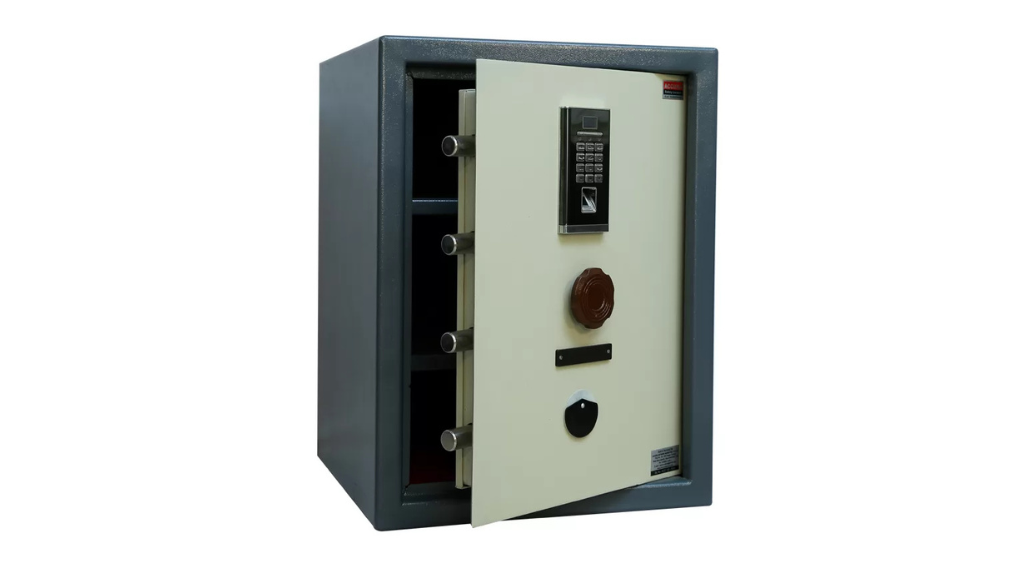
Compact Home Locker
₹12,999
Enquire Now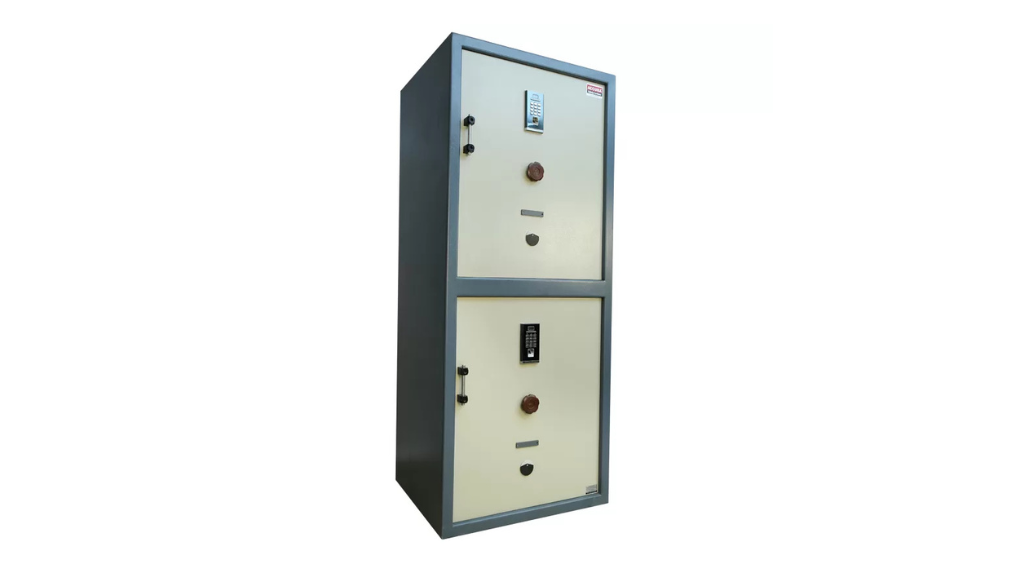
Commercial Safe 40L
₹19,999
Enquire Now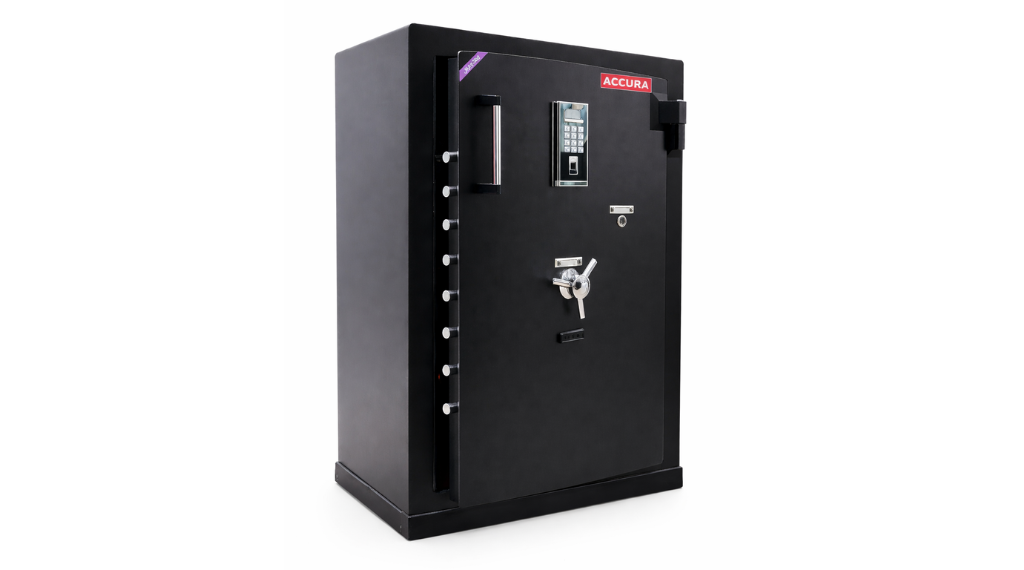
Multi-Bay Gym Locker
₹42,500
Enquire Now
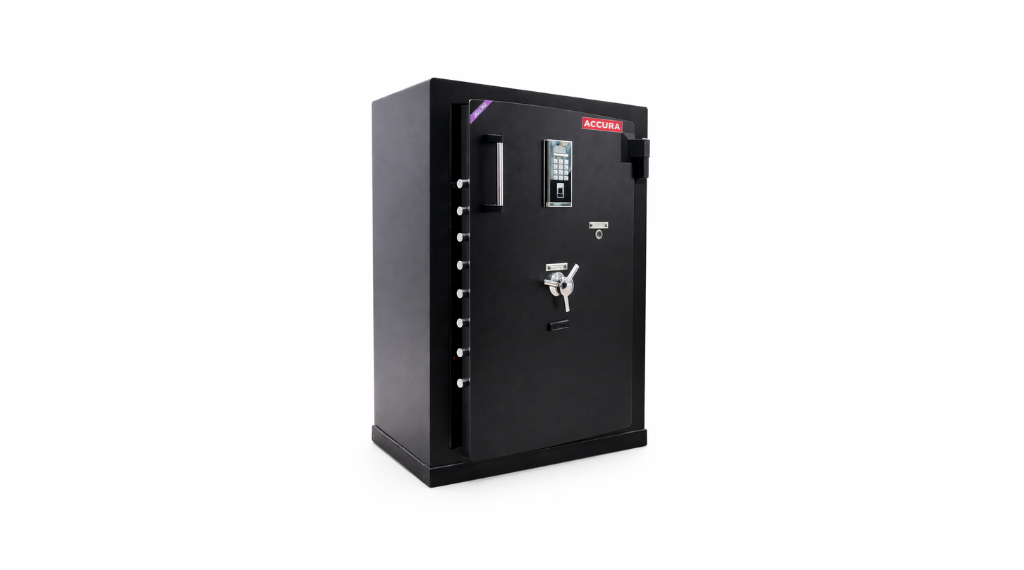
Bank Deposit Locker
₹68,000
Enquire NowBest Biometric Safe Lockers for Home in India 2026
Indian families store a large share of their wealth in gold jewellery, cash reserves and important property documents. Traditional steel almirahs or simple key lockers no longer provide enough protection against modern theft risks. A biometric safe locker for home solves this problem by using fingerprint recognition as the primary access method. Only registered fingerprints can open the door, and most models also include a digital PIN and mechanical emergency key as backup.
In 2026 the market for biometric home lockers has matured significantly. Buyers now find reliable options from established brands with better sensors, thicker steel bodies, motorised bolts and practical capacities suitable for typical Indian homes. This guide explains what makes a good biometric safe, the ideal sizes for different needs, the features that actually matter, and how to choose the right model for jewellery, cash and documents.
Why Biometric Access Is Better for Indian Homes
Traditional key lockers create two common problems. Keys can be lost, duplicated or stolen. Shared PIN codes are often written down or known to domestic help and visitors. Biometric lockers eliminate both issues. Each authorised family member registers their own fingerprint. Opening takes less than a second. There is no code to remember and no physical key that needs to be carried or hidden.
Most quality models support 20 to 30 fingerprints. This is enough for parents, adult children and trusted family members. When someone moves out or help changes, that fingerprint can be deleted. An emergency mechanical key is always included so the locker can still be opened if the batteries fail or the sensor develops a temporary problem.
Key Factors to Consider Before Buying
Capacity is the first decision. A 16–20 litre locker is sufficient for daily-wear jewellery, a few passports and some cash. Families with wedding jewellery collections and important documents usually prefer 30–40 litre models. Larger 55 litre units suit those who also store files or small electronics. Always check the internal dimensions rather than relying only on the advertised litre figure, because shelves and door hardware reduce usable space.
Steel thickness and locking mechanism determine real security. Look for a body of at least 2–3 mm mild steel and a reinforced door. Motorised multi-point bolts are preferable to simple solenoid locks. A built-in anti-tamper alarm that sounds on forced entry attempts adds another layer of protection. Fire-resistant options are available at higher price points if document protection is a priority.
Sensor quality matters more than many buyers realise. Optical or capacitive sensors that work reasonably well with dry or slightly damp fingers perform better in Indian conditions. Registration of multiple angles of the same finger improves recognition reliability. Models that allow both fingerprint and PIN entry give the best balance of convenience and backup options.
Ideal Placement and Installation
Even the strongest locker is only as secure as its installation. Bolting the unit to the floor or a solid wall is essential. Many thefts involve simply carrying away an unanchored safe. Common locations include inside a wardrobe, under a bed (if bolted) or in a discreet corner of a bedroom. Avoid bathrooms or areas with high humidity because moisture can affect sensor performance over time.
During setup, register all regular users and test each fingerprint several times. Keep the emergency key in a separate secure location, never inside the locker itself. Change the master PIN if the model allows it, and note the battery type so replacements can be kept ready.
Digital PIN vs Full Biometric Models
Pure digital PIN lockers remain popular because they are more affordable. They work well for single users or small households where the code can be carefully managed. Full biometric models cost more but remove the shared-code problem completely. For most families with jewellery of significant value, the extra investment in fingerprint access is worthwhile. Hybrid models that offer fingerprint + PIN + emergency key provide the highest practical security and convenience.
What to Expect in Different Price Ranges
Entry-level biometric lockers typically start around ₹10,000–₹15,000 and offer basic fingerprint capacity, steel construction and an emergency key. Mid-range models between ₹15,000 and ₹25,000 usually add better sensors, thicker doors, motorised bolts and higher fingerprint capacity. Premium options above ₹25,000 may include fire resistance, Wi-Fi alerts, larger capacity and refined interior organisation for jewellery.
Warranty coverage of one to two years is standard. Prefer brands that offer service support across major Indian cities. Check that the product includes wall or floor mounting hardware and clear instructions.
Practical Tips for Long-Term Use
Clean the fingerprint sensor periodically with a soft dry cloth. Avoid using wet or oily fingers. Replace batteries as soon as the low-battery indicator appears. Periodically test the emergency key so you know it works. If the locker will be accessed by elderly family members, ensure the sensor is at a comfortable height and that registration was done carefully.
A well-chosen biometric safe locker becomes a permanent part of home security. It protects jewellery that may have been collected over generations, cash kept for emergencies, and documents that are difficult or expensive to replace. In 2026 the technology is mature, reliable and widely available. Selecting the right capacity, confirming steel quality and proper installation delivers years of convenient and secure storage.
Features
Frequently Asked Questions
What is the best capacity for a biometric safe locker in an Indian home?
For daily jewellery and a few documents, 16–20 litres is usually enough. Families with wedding jewellery and important papers should choose 30–40 litres. Always verify internal dimensions before purchase.
How many fingerprints can a typical home biometric locker store?
Most quality models support 20 to 30 fingerprints. This is sufficient for parents, adult children and other authorised family members. Unused fingerprints can be deleted when needed.
What happens if the batteries die in a biometric locker?
Every reliable biometric safe includes a mechanical emergency key. Keep this key in a separate secure place. Some models also allow temporary external power for the keypad.
Is a biometric locker safer than a digital PIN locker?
Yes for multi-user households. Fingerprints cannot be shared or written down like a PIN. Hybrid models that offer both fingerprint and PIN provide the best combination of security and convenience.
Should the biometric locker be bolted to the floor or wall?
Yes. An unanchored locker can be carried away. Use the provided mounting points to fix the unit securely to a solid surface. This is one of the most important security steps.
Can biometric lockers work reliably in Indian weather conditions?
Quality sensors perform well in normal home conditions. Avoid placing the locker in very humid areas. Register multiple angles of each finger during setup for better recognition accuracy.
Looking for the right biometric safe locker for your home?
Tell us your capacity needs and number of users — our team will recommend the best model for jewellery, cash and documents.