
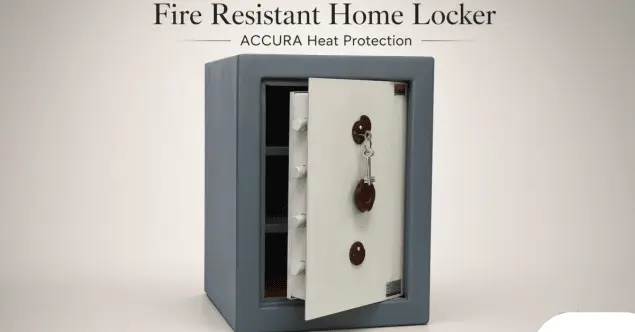
Fire remains one of the most underestimated risks to household valuables in India. Kitchen accidents, electrical short circuits, short-circuiting inverters, or neighbouring property fires can destroy jewellery, cash, property documents, passports and insurance papers within minutes. Ordinary steel lockers and wooden cupboards offer little protection once temperatures rise. A fire resistant home locker is specifically engineered to slow heat transfer and give contents a realistic chance of surviving.
A fire resistant home locker uses double-wall construction with an insulating barrier (often ceramic wool or similar high-temperature material) sandwiched between the inner and outer steel layers. This design significantly delays the rise in internal temperature even when the exterior is exposed to intense heat. Combined with the usual dual locking systems and proper bolting, it addresses both theft and fire risks in a single unit.
Why Fire Resistance Matters for Indian Homes
Indian homes face multiple fire triggers: open-flame cooking, overloaded electrical circuits, poorly maintained inverters and water heaters, and densely packed residential buildings where fire can spread quickly. Documents such as property deeds, wills and insurance policies are often irreplaceable. Gold and jewellery can melt or become severely damaged at high temperatures. Even if the structure survives, the contents of an ordinary metal box may not.
Bank lockers provide some institutional fire protection, yet they remain inaccessible during emergencies and involve ongoing costs. A fire resistant home locker keeps critical items inside the residence, available 24/7, while adding a meaningful layer of heat protection. For families who already own or plan to buy a home safe, choosing a fire-rated version is a logical upgrade.
How Fire Resistant Construction Works
Standard single-wall steel lockers heat up rapidly. In a fire resistant home locker the outer steel shell absorbs the initial heat, the insulating layer slows conduction, and the inner steel wall further protects the contents. High-quality designs are tested to withstand temperatures in the range of 1000°C or higher for a defined period (commonly 30–60 minutes or more, depending on the rating). The goal is not absolute immunity — no small home locker can survive a prolonged, intense structural fire indefinitely — but to buy critical time so that fire services can respond or the fire can be contained.
The door is usually the most vulnerable point. Fire-resistant models therefore feature thicker doors, better sealing and continuous insulation around the frame. Dual locking (mechanical key plus digital PIN or biometric) remains fully functional under normal conditions and is protected by the same insulated structure.
Key Features to Evaluate
When selecting a fire resistant home locker, examine these points carefully:
- Double-wall construction with certified insulation: Confirm the presence of a proper fire barrier rather than a simple single-wall box marketed with vague “fire protection” claims.
- Steel thickness: Outer and inner walls should still meet the usual strength standards (body around 3 mm, door 6 mm or more) so theft resistance is not compromised.
- Door and sealing design: A well-fitted, insulated door is essential for maintaining the internal temperature barrier.
- Dual or triple locking: Fingerprint or PIN access plus emergency mechanical key ensures usability is not sacrificed for fire protection.
- Mounting capability: Pre-drilled holes for wall or floor bolting remain critical. Fire resistance does not help if the entire unit can be carried away.
- Internal organisation: Shelves or compartments help keep documents and jewellery orderly and reduce contact with hot surfaces.
- Weight and stability: Fire-resistant models are typically heavier because of the extra materials; this is a positive indicator of substance.
Capacity selection follows the same logic as ordinary home lockers. Compact units suit personal jewellery and essential documents. Medium family sizes handle full collections plus paperwork. Larger models serve homes that also store business records or higher cash volumes.
Placement and Installation Considerations
Locate the fire resistant home locker in a relatively protected part of the house — ideally away from the kitchen and main electrical panels if possible. Master bedrooms, walk-in wardrobes or dedicated storage areas are common choices. Ensure the chosen spot allows proper bolting to a solid wall or floor.
After installation, test all access methods, change any default codes, register fingerprints if applicable, and store the emergency key separately. Keep the exterior clean and free of combustible materials. Although the locker is designed to resist heat, surrounding clutter can still feed a fire.
Practical Benefits Families Experience
A fire resistant home locker delivers dual protection. In normal times it functions as a secure, convenient storage point with 24/7 access. During a fire it significantly improves the survival odds of documents and valuables compared with ordinary furniture or single-wall metal boxes. Many owners report greater peace of mind knowing that property papers and insurance documents have a realistic chance of remaining usable even after a serious incident.
The one-time cost is higher than a basic digital locker, yet it is still far lower than the potential loss of irreplaceable documents or melted jewellery. When compared with years of bank locker rentals plus the inconvenience of restricted access, the value proposition becomes clear for items that need both security and availability.
Common Mistakes to Avoid
Buyers sometimes assume any steel locker is fire resistant. Others prioritise fire rating while accepting thin walls or single locking, weakening overall security. Skipping bolting or placing the unit next to high-risk areas (directly beside the gas stove or main electrical board) reduces effectiveness. Choosing an undersized unit that forces documents to be folded or jewellery to be piled tightly can also increase damage risk under heat.
Conclusion
A fire resistant home locker addresses a real and often overlooked risk in Indian households. By combining double-wall insulated construction with strong steel, dual locking and proper mounting, it protects jewellery, cash and critical documents against both theft and fire while keeping them accessible every day.
ACCURA fire resistant home lockers are built with these dual requirements in mind. ACCURA models feature double-walled construction with specialised fire-resistant barriers capable of withstanding high temperatures, robust mild-steel outer and inner layers (typically 3 mm body and 6 mm door), single-sheet moulding where applicable, powder-coated finishes, dual locking systems (digital PIN or biometric fingerprint plus emergency mechanical key), pre-drilled mounting points and practical internal layouts. Whether you need a compact unit for essential documents and jewellery or a larger family-sized model, ACCURA provides reliable heat protection without sacrificing everyday security or convenience. Backed by clear installation guidance and multi-year service support, an ACCURA fire resistant home locker offers Indian families a practical, long-term solution for safeguarding what matters most.
FAQs
Q: How much heat can a fire resistant home locker withstand? A: Quality models are designed to protect contents at temperatures around 1000°C or higher for a defined period (often 30–60 minutes or more). Exact performance depends on the specific construction and test rating.
Q: Does fire resistance replace the need for bolting and dual locking? A: No. Fire protection is an additional layer. Proper bolting and dual locking (electronic + emergency key) remain essential for theft resistance and reliable access.
Q: Are fire resistant home lockers much heavier? A: Yes. The extra insulation and double walls increase weight, which is generally a positive sign of substantial construction.
Q: Can documents and jewellery survive inside during a house fire? A: A fire resistant home locker greatly improves survival chances compared with ordinary storage, but no small residential locker can guarantee survival in a prolonged, extreme structural fire. It buys critical time.
Q: Is a fire resistant model worth the extra cost? A: For households storing irreplaceable documents and high-value jewellery, the added protection against a real risk is usually justified, especially when viewed against potential losses or long-term bank locker costs.