
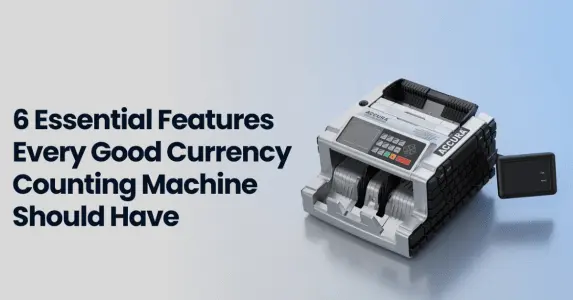
Not every currency counting machine is built the same. Some only count notes. Others protect your business with accuracy, speed, and reliable fake note detection. When you invest in one, the features you choose decide whether the machine becomes a helpful tool or a source of daily frustration.
Here are the six features that matter most in real business use.
1. Multi-Layer Counterfeit Detection This is the most important feature. Look for machines that combine UV, MG (magnetic), and IR (infrared) detection. Advanced models also check size, thickness, and watermark. A machine that only uses one method leaves gaps. Strong multi-layer detection stops suspicious notes and alerts the user clearly.
2. Reliable Counting Speed Speed should match your daily volume. For most shops and offices, 900–1200 notes per minute is comfortable. Higher volumes need faster machines. Consistent performance without frequent jams is more important than the highest number printed on the box.
3. Adequate Hopper and Stacker Capacity A small hopper forces constant refilling. Choose capacity based on how many notes you normally count at one time. Smooth feeding and stable stacking reduce interruptions and make the process faster.
4. Clear Display and Useful Functions A bright LCD or LED screen, simple controls, auto start/stop, batch counting, and add function make daily use easier. Voice alerts are helpful in noisy environments. Machines that are complicated or have poor visibility create more mistakes than they prevent.
5. Solid Build Quality and Dust Resistance Notes in many environments are dusty or slightly worn. A sturdy machine with good internal design handles real-world conditions better. Overheating, excessive noise, or frequent paper jams are signs of weak construction.
6. Value Counting and Practical Extra Modes Piece counting is basic. Value counting (where the machine calculates the total amount) saves significant time when handling mixed denominations. Other useful modes include different currency settings and external display options for customer verification.
When these six features are present, the currency counting machine becomes a reliable daily tool rather than something staff avoid using. Many buyers focus only on the lowest price and later face problems with weak detection, slow speed, or poor durability.
Match the features to your actual cash volume and working conditions. A machine that looks advanced on paper but fails in daily use is not a good investment. The right combination of detection, speed, capacity, ease of use, build quality, and useful modes delivers consistent results and real protection.
A well-chosen currency counting machine reduces errors, saves time, and gives confidence that the cash being handled is accurate and genuine. That peace of mind is worth more than the difference in price between a basic model and a properly equipped one.
FAQs
Q1. Which detection technologies are best in a currency counting machine? A: The best machines use a combination of UV (ultraviolet), MG (magnetic), and IR (infrared) detection for stronger protection against fake notes.
Q2. What hopper capacity is ideal for daily business use? A: A hopper capacity of 200–300 notes is comfortable for most shops and offices. Larger businesses may need higher capacity.
Q3. Is value counting necessary in a currency counting machine? A: It is highly recommended if you regularly handle mixed denomination notes, as it automatically calculates the total value and saves time.
Q4. How do I check the build quality of a currency counting machine? A: Look for solid construction, low noise, good heat management, and positive long-term feedback about fewer paper jams and reliability.
Q5. Should I buy a basic counting machine or one with advanced features? A: For regular business use, choose a machine with multi-layer fake note detection, good speed, clear display, and solid build rather than a basic low-cost model.