
Introduction
In modern homes, a locker isn’t just for schools or gyms — it’s an elegant solution for organizing and securing valuables, documents, and daily-use items. But with so many options (metal, wood, digital, hidden), how do you pick one that’s both secure and stylish? In this guide, we’ll walk you through:
- The types of home lockers
- Key factors in evaluating them
- Good options (with pros/cons)
- Practical tips & recommendations
By the end, you’ll be confident selecting a locker that truly fits your home needs.
1. Types of Home Lockers & Locking Mechanisms
Choosing the right category helps narrow down options. Let’s explore the common types.
| Type | Description | Pros | Cons |
|---|---|---|---|
| Standalone metal locker / cabinet | Freestanding steel lockers (single or multi-tier) | Durable, fire/impact resistant | Can look “industrial” unless well finished |
| Wood / laminate locker / cabinet | Wooden or composite material locker styled like furniture | Visually warmer, matches interiors | Less resistant to impact, moisture issues |
| Built-in / recessed / in-wall locker | Integrated into wall or cabinetry | Discreet, space-saving | More costly installation, needs precise planning |
| Mirror-locker / concealed locker | Locker hidden behind mirror, panel or in niche (e.g. behind bathroom mirror) | Very discreet, stylish | Typically smaller capacity, more custom work |
| Electronic / smart lockers | Use keypad, RFID, biometric locks | Convenience, remote control, audit trail | Requires power/battery, higher cost |
Locking Mechanisms (for lockers / safes)
- Traditional key / cam lock: Simple and reliable; minimal maintenance
- Dial / combination lock: No key to lose; mechanical (no power)
- Electronic keypad / code lock: Easy to change codes, multiple users
- Biometric (fingerprint / iris): Fast access, high-tech
- Dual / hybrid lock (e.g. key + keypad)
- Time-delay locks / audit-enabled locks (useful for high-security items)
According to safe-lock guidance, the choice of the lock is almost as critical as the body of the locker. Best Locker for home
2. Key Evaluation Criteria (What Makes a “Best” Locker)
When comparing options, these are the features you should evaluate carefully.
2.1 Security & Strength
- Material & thickness: Prefer steel (e.g. ≥ 1.2–1.5 mm for residential use) or good-quality engineered wood with reinforcement.
- Lock quality / rating: Look for well-known lock brands, anti-tamper features, pick resistance.
- Hinge / seam protection: Concealed hinges or internal hinges reduce leverage attacks.
- Bolt design: Multi-direction bolts (top, bottom, side) are stronger.
- Mounting / anchoring: The locker should be fixed to wall/floor to prevent tipping or removal.
2.2 Capacity, Size & Layout
- Assess what you plan to store (documents, jewelry, small electronics, gadgets, etc.).
- Internal layout (shelves, drawers, dividers) for better organization.
- Enough space to allow opening doors fully even in compact rooms.
2.3 Aesthetics & Blending with Home Decor
- Finishes: Powder-coated steel, wood veneer, matte, satin, etc.
- Minimalist lines, hidden handles, flush edges help the locker “disappear” into decor.
- Mirror or glass fronts, or styling to look like cabinetry.
2.4 Accessibility & Convenience
- How many users? Need code sharing, biometric convenience?
- Power / battery access in smart locks.
- Fail-safe methods (override key, emergency power) in case of lock battery failure.
- Quiet mechanisms (soft close hinges, dampers).
2.5 Environmental Durability
- Moisture / humidity resistance (for bathrooms, basements).
- Corrosion resistance (powder coating, anti-rust treatment).
- Fire resistance (for valuable documents / small safes).
- Pest resistance (wood lockers sometimes vulnerable in termite zones).
2.6 Price, Warranty & Service
- Compare “cost per usable capacity.”
- Warranty period on the locker body and locks.
- After-sales service and availability of spare parts (especially critical for smart systems).
3. Recommended Options & Use-Case Scenarios
Below are a few curated options and when they’re ideal. (Note: these are illustrative; check for models in your market.)
Option A: Steel Multi-tier Locker (e.g. 2-4 compartments)
- Best for: General home use (storing books, gadgets, tools)
- Pros: robust, modular
- Cons: can look institutional unless finished
Ideal features: Hidden hinge, good lock, anchorable frame, powder-coated finish (matt black, magnesium grey etc.)
Option B: Furniture-style Wooden Locker / Cabinet with Lock
- Best for: Living rooms, bedrooms — when you want the locker to blend in
- Pros: aesthetic appeal, warmer feel
- Cons: less impact resistance
Ideal features: Engineered wood or solid wood, reinforcing metal backing, quality lock, internal layout.
Option C: Mirror / Concealed Locker
- Best for: Minimalist homes, cramped apartments
- Pros: highly discreet, dual function as mirror
- Cons: smaller size, custom work
This is illustrated in design blogs where lockers with mirrors integrate both style and concealed storage. srv1843024.hstgr.cloud/
Option D: Smart / Electronic Locker (keypad, biometric)
- Best for: Tech-savvy users, families who share access
- Pros: flexibility, logs, remote access
- Cons: depends on power, higher cost
Ideal features: Backup power, lock fail-safe, robust encryption, solid mechanical backup.
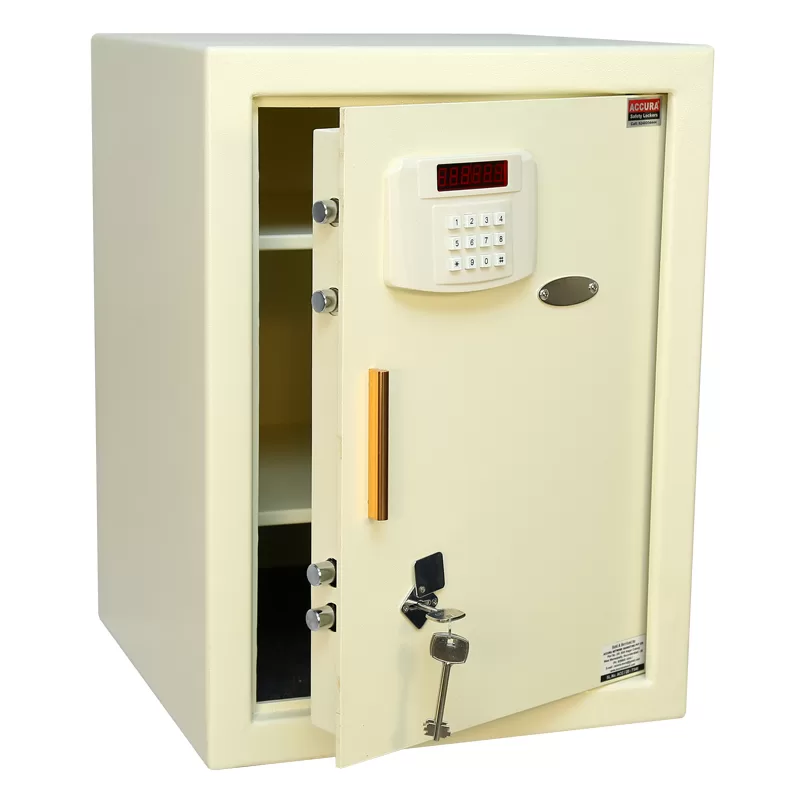
Option E: Small High-Security Safe-Style Locker (for valuables)
- Best for: jewelry, passports, cash
- Pros: high security
- Cons: smaller capacity, expensive
Look for safes with certified lock systems (mechanical, electronic, biometric) and good body strength.
4. Example Selection (Hypothetical Comparisons)
| Use Case | Suggested Type | Why It Works |
|---|---|---|
| Store travel documents, passports, cash | Small fire-rated safe-locker with electronic + key override | Strong, compact, secure |
| Household gadget / charger station | Steel 2-open-door locker with internal shelves & cable routing | Durable + functional |
| Entryway storage (keys, wallets) | Slim locker hidden behind mirror or wall panel | Discreet, stylish |
| Family shared items (backpacks, shoes) | Multi-tier steel locker with coded access | Organizational and secure |
| Bedroom clothing / accessory safe | Wooden cabinet style locker with biometric lock | Blends with bedroom décor |
5. Steps to Choose the Best Locker for Your Home
- List your storage needs (what items, how many)
- Measure available space (height, width, depth)
- Decide security level needed (for trivial items vs high-value)
- Choose style / finish to match interiors
- Evaluate locking type and reliability
- Check mounting / anchoring possibility
- Verify warranty, after-sales, spare parts
- Order / inspect sample / test locks before full deployment
6. Summary & Recommendations
- For general purpose in most homes: A mid-thickness steel locker with a quality mechanical or keypad lock, well-anchored and with a good finish.
- For aesthetics: Go with wooden or concealed mirror lockers, but reinforce edges and lock mechanisms well.
- For high-value items: Use small safe-style lockers with strong locks and fire/damage resistance.
- For tech-lovers: Smart / biometric lockers provide convenience, but always ensure you have fallback access (keys, manual override).